How to Buy Lab Tested THCA Online: A Buyer's Guide
Table of Contents
- Why Lab Tested THCA Matters When You Buy Online
- How to Read a THCA Lab Report Before You Buy
- What a THCA Certificate of Analysis Should Include
- THCA Shipping and Age Requirements You Need to Know
- Choosing Strains, Strengths, and Product Formats
- Pricing, Budget Options, and What You're Paying For
- Storing Your THCA Products for Freshness
- Frequently Asked Questions
Last Updated: October 9, 2026
Why Lab Tested THCA Matters When You Buy Online
When you buy lab tested THCA online, you're trusting a seller you can't see in a market where "lab-tested" gets thrown around loosely. Because it sits in a legal gray zone, the only real proof of what you're buying is an independent lab report.
At Tree Haus Cannabis Boutique, we've built our shelves around that principle.
Here's the uncomfortable truth most shoppers learn the hard way. A vendor can print "lab tested" on a label without ever sending a sample to a lab. The FDA's warning letters on unapproved cannabis claims show how often marketing outruns reality in this space.
How to Read a THCA Lab Report Before You Buy
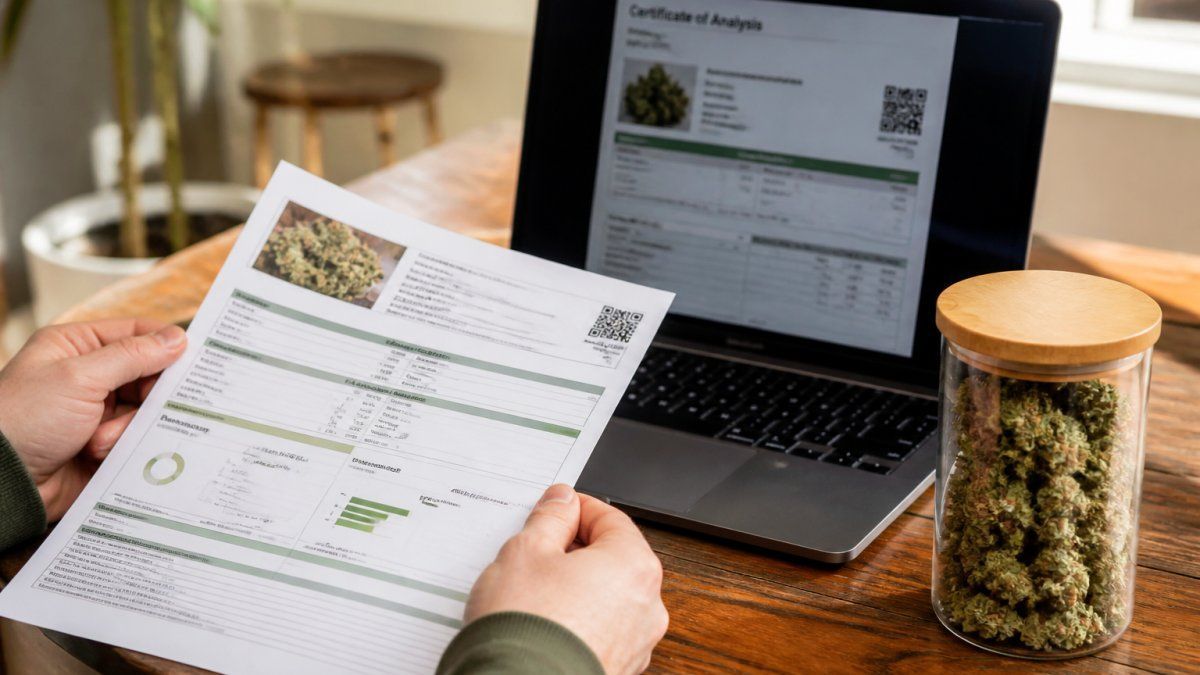
Reading a THCA lab report comes down to two questions: how much THCA is in the product, and what else is in it. A lab report, also called a Certificate of Analysis (COA), breaks a batch into its cannabinoid content and contaminant screening.
Start With the Header: Who Tested It and When
Before you read a single number, check the top of the report. You want four things:
- The lab's name , a real, searchable analytical lab, not a generic logo
- Accreditation , look for ISO/IEC 17025, the standard most reputable cannabis and hemp labs are accredited under
- The sample received date and the report date , these should be recent and close together
- The batch or lot number , the identifier that ties this paper to a specific production run
If the lab name is missing or you can't find the lab through a normal search, stop there. An unverifiable lab is the same as no lab.
Potency and Cannabinoid Profile
The potency section lists each cannabinoid as a percentage of the total sample. Look for THCA first, then the Delta-9 THC level, which federal law caps at 0.3% on a dry-weight basis for hemp. A product can be high in THCA and still stay under that threshold, that balance is what makes hemp-derived THCA legal to ship in most states.
A few reading tips that separate a real report from a padded one:
- THCA and Delta-9 THC are listed separately. THCA is the raw acid form; Delta-9 THC is what it becomes after heating. Don't confuse the two columns.
- Total THC is a calculated figure , not a measured one. Labs derive it from the Delta-9 THC plus a conversion of THCA. If a report shows a suspiciously round "total THC" with no supporting cannabinoid rows, that's a shortcut, not a test.
- Watch for trace cannabinoids like CBG, CBC, and CBN. Their presence is normal in flower and a sign the sample was actually run through a full panel rather than a single-target screen.
- Compare across batches. If every product on a storefront shows identical percentages to two decimal places, the reports were likely copied, not generated per batch.
Contaminant Testing Beyond THC
Potency is only half the story. A serious report also screens for pesticides, heavy metals, residual solvents, and microbials like mold and yeast, problems you can't see or smell. A flower that looks perfect can still carry mold from a damp cure room.
Here's what each panel is actually looking for:
- Pesticides , a multi-analyte screen, typically dozens of compounds, run against state or federal action limits
- Heavy metals , lead, cadmium, arsenic, and mercury, reported in parts per million or parts per billion
- Microbials , total yeast and mold, plus specific pathogens like Aspergillus and Salmonella
- Residual solvents , relevant mainly to vapes, concentrates, and live resin, where extraction chemicals can linger
A full-panel COA reports each of these with a pass/fail or a measured value against a limit. If a report shows only potency, it isn't a safety document, it's a strength label.
Match the COA to the Jar in Your Hand
A clean report means nothing if it belongs to a different batch than the one shipped to you.
- Find the batch or lot number on the product label or the packaging.
- Find the same number in the header of the COA.
- Confirm the product name and format match.
- Confirm the report date is recent enough to reflect the batch you received.
If the numbers don't match, contact the seller before using the product. A vendor that can't produce a matching report for your specific batch has not actually verified what you bought.
A COA is only useful if you can match it to your batch. Check the lab, the date, the full panel, and the batch number, in that order, before you trust the product.
What a THCA Certificate of Analysis Should Include
A complete THCA certificate of analysis should include the lab's name and accreditation, the batch or lot number, the sample received and tested dates, the full cannabinoid breakdown, and the contaminant panel. If any piece is missing, the document is a marketing flyer, not a lab report.
The batch number is the detail most shoppers overlook, it ties the paper to the jar in your hand. Without it, a vendor could show you one clean report and ship a different batch. Always match the COA number to the product label.
Red Flags in a COA
Watch for these warning signs before you buy lab tested THCA from any seller:
- No lab name, or a lab you can't look up
- Missing batch or lot number
- Potency listed but no contaminant results
- Test dates older than a few months
- Screenshots of reports instead of original PDFs
- Numbers that look copied across every product
Any one of these should make you pause. Two or more, and you should walk away.
THCA Shipping and Age Requirements You Need to Know
THCA shipping and age requirements vary by state, and no seller can override them. Federal law requires buyers to be 21 or older for hemp-derived products in most contexts, and reputable sellers verify age at checkout. A five-minute shipping check saves you a refused order.
A Repeatable State-by-State Check
Rather than trusting a storefront banner that says "ships to most states," run this process before you order:
- Start with the federal baseline. Hemp-derived THCA is federally legal when the finished product stays at or under 0.3% Delta-9 THC on a dry-weight basis. The USDA hemp program guidance explains how the federal hemp framework works.
- Layer your state's rules on top. Many states have passed their own restrictions on hemp-derived intoxicating cannabinoids, and some regulate THCA specifically. Check your state agriculture department or the agency that oversees hemp and consumer products.
- Check for format-specific bans. A state that allows hemp flower may still restrict vapes, concentrates, or edibles. The format matters as much as the cannabinoid.
- Check local rules. Some municipalities add their own restrictions on top of state law.
- Confirm the vendor's ship-to list. A compliant seller publishes the states it will not ship to and updates that list as laws change.
Because these rules shift, verify your state's current regulations before ordering, and re-check if it's been a few months since your last purchase.
What Age and ID Verification Actually Looks Like
Age verification isn't a formality. Reputable sellers use one or more of these at checkout:
- A date-of-birth gate that blocks under-21 buyers
- Third-party age-verification software that checks public records
- Signature-required delivery on higher-value orders
- ID check at the door for carriers that require adult signature
A vendor with no age step at all is telling you how seriously they treat compliance.
Carrier and Delivery Realities
Even a legal order can run into carrier policy. Expect:
- Adult signature requirements on some routes, so someone 21 or older must be home
- State-line refusals if a package is routed through or into a restricted state
- Discreet packaging with no cannabis branding
- Tracking and a realistic delivery window rather than vague "fast shipping" claims
A trustworthy seller verifies your age, publishes a clear list of states it won't ship to, uses discreet packaging, provides tracking, and explains what happens if a package is refused or returned. A vendor that promises to ship anywhere with no questions is a red flag, not a perk.
Choosing Strains, Strengths, and Product Formats
THCA comes in more formats than most newcomers expect, and the right one depends on how you plan to use it. Flower is the traditional choice, smoked or vaporized. Pre-rolls offer convenience. Vapes and live resin deliver fast effects. Edibles and beverages provide a slower, longer experience.
| Format | Onset Speed | Best For | Potency Note |
|---|---|---|---|
| Flower | Fast when heated | Traditional experience | Varies by strain |
| Pre-rolls | Fast when heated | Convenience | Pre-measured |
| Vapes / live resin | Fast | Quick relief | Concentrated |
| Edibles | Slow | Long-lasting effects | Dose carefully |
| Beverages | Moderate | Social, low-key use | Easy to pace |
When choosing a strain, think about the experience you want rather than the name. New users should start with lower-potency options and small amounts. Our team at Tree Haus Cannabis Boutique walks first-time buyers through this decision.
Pricing, Budget Options, and What You're Paying For
Pricing in the THCA market tracks one thing above all: verification. Budget products often skip the testing premium products pay for, that gap is the real difference between a cheap jar and an expensive one.
Here's what your money typically covers:
- Independent lab testing for every batch
- Contaminant screening beyond basic potency
- Freshness and proper curing
- Compliant packaging and shipping
- Real customer support when something goes wrong
Budget options are fine if the testing is real. Avoid paying a premium price for a product with no verifiable report behind it. Check our current listings for today's numbers.
Storing Your THCA Products for Freshness
Storage decides how long your THCA stays good. Heat, light, and air are the three enemies. Keep flower in an airtight glass jar, away from direct sunlight, in a cool spot.
Vapes and concentrates should stay capped and upright. Edibles and beverages should follow package directions and keep best in a cool, dark place. Label each container with the batch number and date so you can track freshness and match it back to its COA.
Frequently Asked Questions
How can you tell if THCA products are lab tested?
Look for a published Certificate of Analysis (COA) from an accredited laboratory on the product page or via a QR code on the packaging. The COA should show batch-specific results for cannabinoid potency, pesticides, heavy metals, residual solvents, and microbials. If a vendor claims lab testing but does not provide a COA, that is a red flag. Reputable sellers make COAs easy to find and verify before you buy.
What should a THCA certificate of analysis include?
A complete THCA certificate of analysis should list the batch or lot number, testing date, and the accredited laboratory's name. It must show cannabinoid potency (THCA, Delta-9 THC, and other cannabinoids), plus contaminant screening for pesticides, heavy metals, residual solvents, and microbials. The COA should also confirm that Delta-9 THC stays at or below 0.3% on a dry weight basis to meet federal hemp compliance.
Are THCA products legal to buy online?
THCA derived from hemp is federally legal under the 2018 Farm Bill when Delta-9 THC remains at or below 0.3% on a dry weight basis. However, state laws vary, and some states restrict or ban THCA products. Always check your state's regulations before ordering. Reputable vendors like Tree Haus Cannabis Boutique verify shipping eligibility by state and require age verification for all purchases.
How should THCA flower be stored after delivery?
Store THCA flower in an airtight glass jar away from direct sunlight, heat, and humidity. A humidity pack can help maintain moisture without encouraging mold. Keep the jar in a cool, dark place.